


Welcome to the latest issue of Engineering Enablement, a weekly newsletter sharing research and perspectives on developer productivity.
If you weren’t able to attend DX Annual last month, or if you want to revisit specific sessions, all recordings are now available at dxannual.com.
DX Annual brought together ~500 senior engineering leaders from companies like Microsoft, Airbnb, Uber, Vanguard, Dell, and BNY for a day of practitioner-led sessions on what’s working and what isn’t as AI is integrated across the software development lifecycle.
Below are the key themes that emerged across sessions, along with links to the recordings worth watching for each.
The bottleneck of software delivery is no longer writing code
Microsoft’s research shows engineers spend only ~14% of their time writing code. AI has accelerated that 14%, but the other 86%—code review, testing, documentation, deployment approvals—is where meaningful gains are waiting. Vanguard found engineers are 30% faster at coding with AI, but end-to-end cycle time hadn’t moved until they started applying AI across the full lifecycle. Twilio found that top-quartile AI users saw a decline in review turnaround time even though merge time decreased by hours.
Watch: Keynote with Abi Noda & Brian Houck | Vanguard session | Closing panel
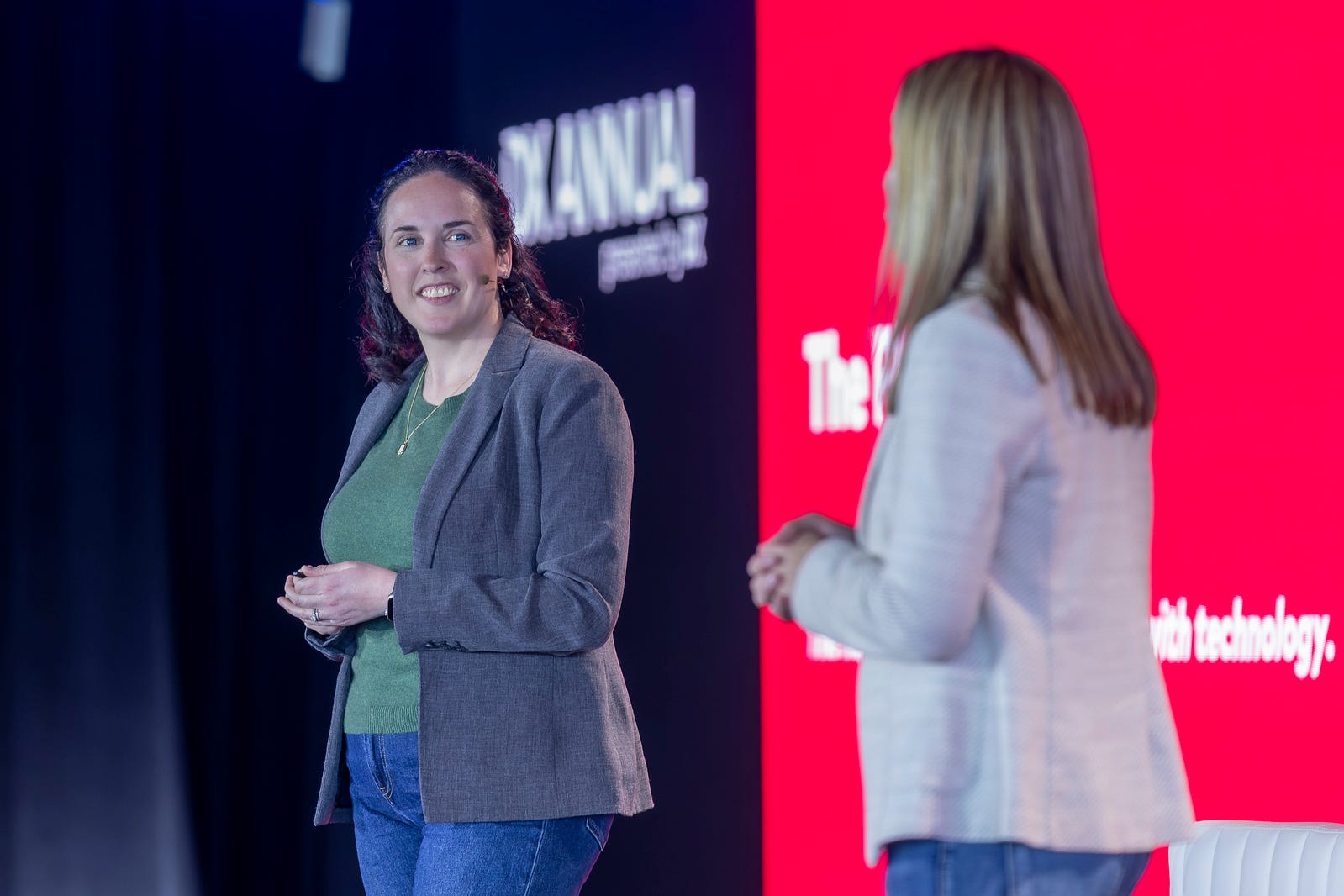
AI token spend is top of mind and organizations are measuring it differently
One organization (300–400 engineers) shared their token spend reached $128,000/week and is climbing toward $150,000. They operate with no caps, believing the opportunity cost of slowing adoption outweighs the bill. Some individual developers spend up to $20,000/month. Despite the headline number, their cost per pull request is actually decreasing as throughput increases.
1Password framed the AI token bill as the new cloud bill—something that must be managed with the same rigor as AWS spend. Their advice: stop using high-powered models for simple tasks, and forward-project consumption to negotiate better per-token rates with providers.
Etsy cautioned against top-down usage mandates that incentivize “tokenmaxxing”: employees generating unnecessary activity just to hit metrics.
Microsoft argued that leaders have a responsibility to create headroom to learn, which includes spending tokens on experimentation that may not produce immediate value. The fastest learners will have a competitive advantage. (They acknowledged Microsoft is in a unique position here.)
Watch: Opening panel | Closing panel
Structured training and skill quality matter more than tool choice
Indeed put ~2,000 engineers through a structured, tool-agnostic AI course. Engineers who completed it saw a 36% reduction in coding time; those who didn’t saw zero change—despite using the same tools at 97% adoption. Another big tech company took a complementary approach: narrowed tool options to two, created one-click setup, and built a champion network of ~50 engineers running peer-led onboarding sessions.
Similarly, Microsoft observed that most engineers, when under pressure, revert to single-threaded, pairing-style workflows rather than orchestrating teams of agents.
Watch: Indeed session | Closing panel
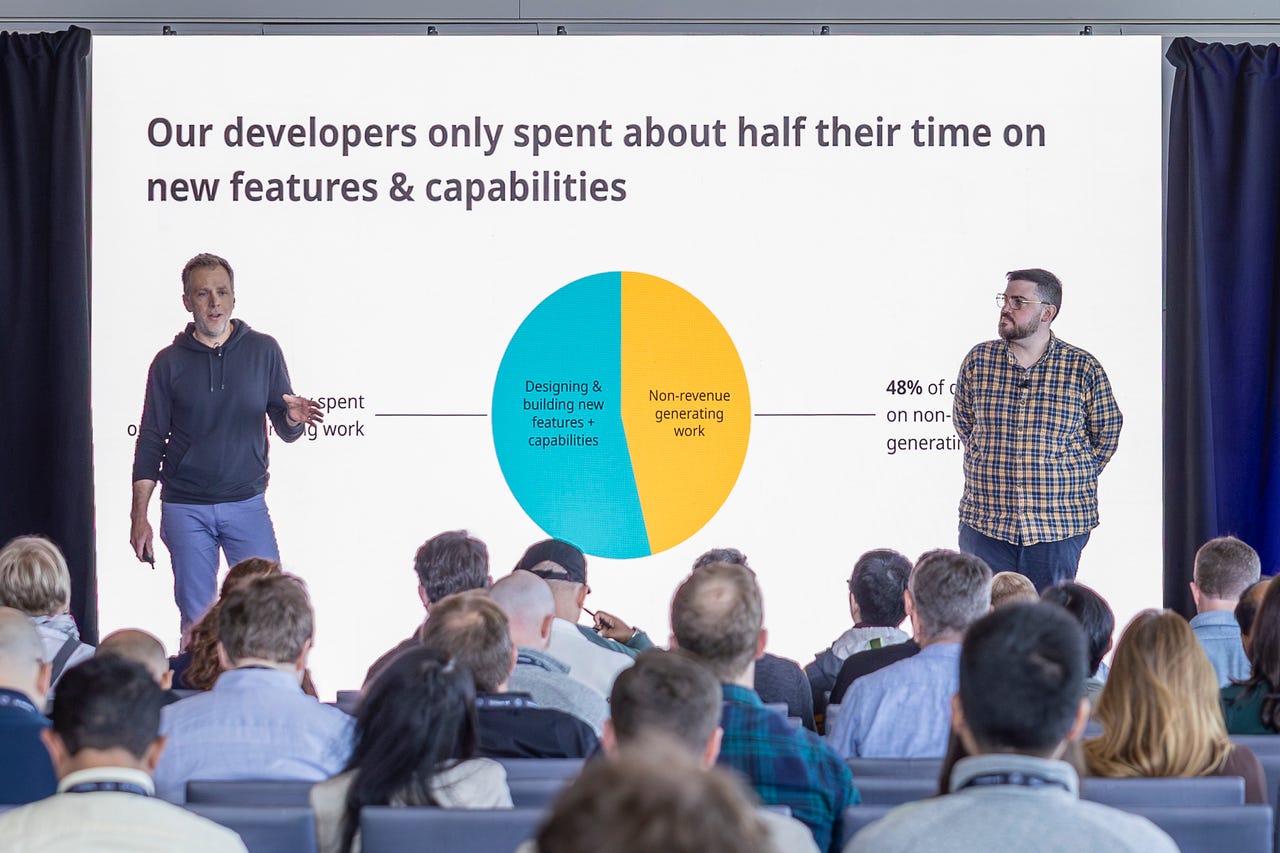
Leaders are incorporating more outcome-focused metrics to measure AI impact
Uber is evolving their measurement to include feature velocity, which captures value delivered regardless of whether a human or agent wrote the code. Dropbox shared that they adopted feature velocity as their primary measure of engineering effectiveness for the same reason: it ties directly to outcomes, not activity.
Some organizations are measuring AI through three areas, covering cost management (spend by team and project), engineering effectiveness (how well AI is being used), and value impact (feature velocity, quality indicators).
Watch: Uber session | Dropbox session
Productivity gains require daily, sustained AI usage
Airbnb segmented engineers by daily AI usage and found the returns aren’t linear. Engineers using AI 4+ hours per day more than doubled their output versus pre-AI baselines. Casual users saw only modest improvement. Organization-wide, Airbnb is seeing 65% higher throughput and 59% AI-authored code with no mandate in place. Additionally, Intercom showed what sustained usage looks like at scale: 95.9% of PRs authored by Claude, throughput doubled in 9 months, defect backlog down over 50%.
Watch: Airbnb session | Intercom session
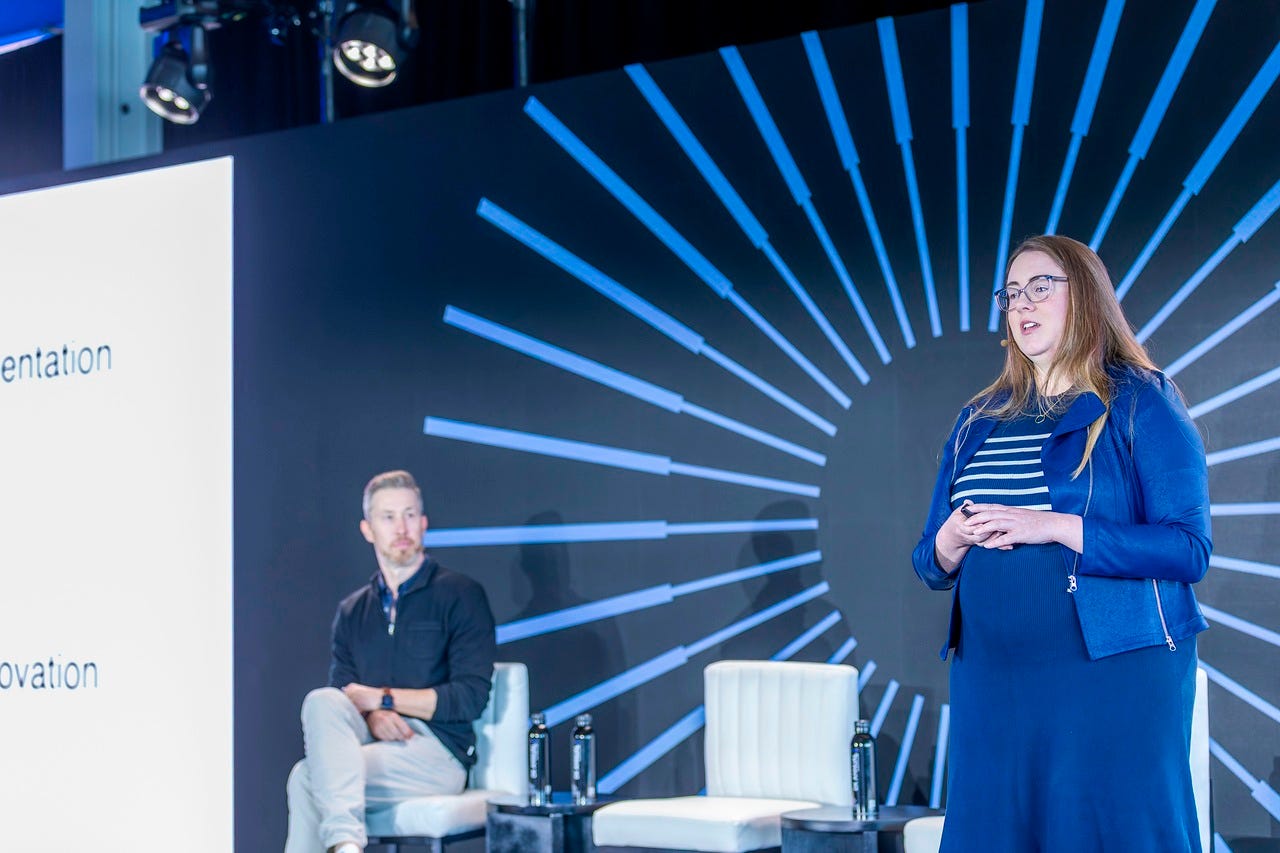
PMs and designers are shipping code, and organizations are adapting
Airbnb has 2× as many AI users as developers—PMs, data scientists, designers, even their finance team independently onboarded themselves to VS Code. Mercari saw a 45.7% drop in accounting tasks and 60% reduction in help desk workload from AI tools operated by non-engineering teams. Vanguard is embedding AI across PMs, designers, and QA, treating the full team as the unit of productivity improvement.
Watch: Airbnb session | Mercari session | Vanguard session
All sessions
For the full list of recordings, visit the Sessions page at dxannual.com.
DX Annual was an invite-only event. Stay tuned for 2027 dates to be released soon.